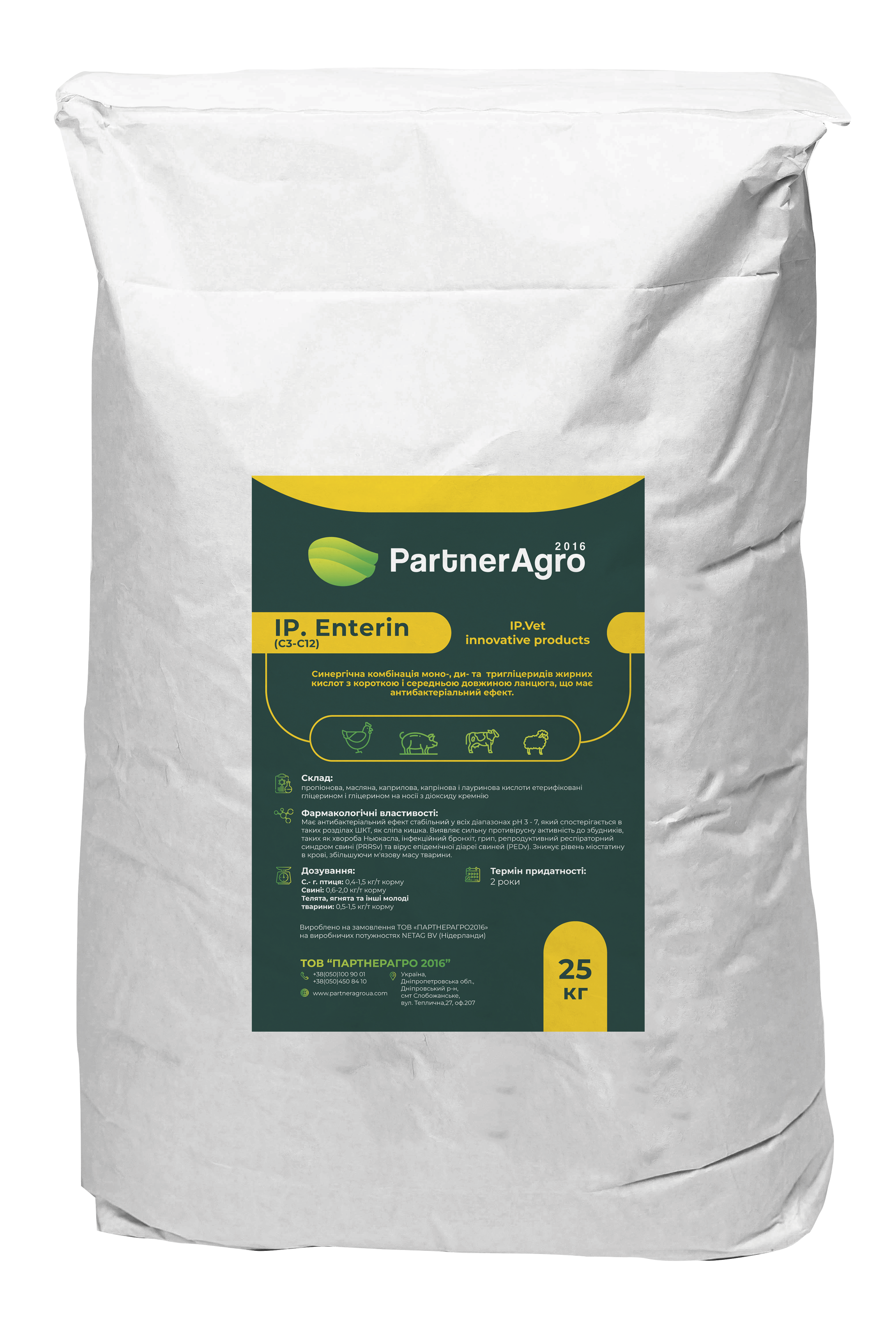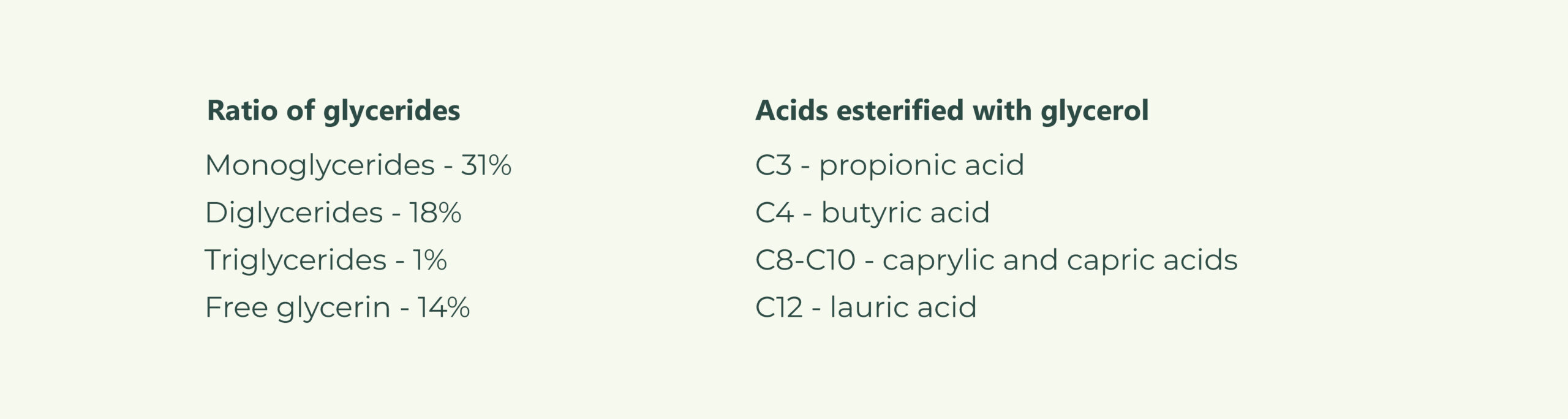
Glycerol is attractive to pathogenic bacteria as a nutrient. When alpha monoglyceride ‘meets’ pathogenic bacteria, the bacteria ‘sees’ the glycerol molecule and passes it into its interior through its feeding channel. Since the glycerol molecule is strongly bound to the organic acid molecules, it also penetrates the pores of the pathogenic bacterium.
The undissociated acid molecule passes through the bacterial cell wall. Inside the cell, the acid molecule dissociates and releases H+, thereby lowering the pH inside the cell. The change in pH disrupts the cell's vital activity, changes the osmotic balance, which ultimately leads to cell death.
In pig production for:
Maintaining intestinal health in the presence of Salmonella spp;
Reduced loss of sow condition by -5%;
Increase in the number of live-born piglets by 0.8 piglets;
Increased weight of newborns +150g;
High preservation to culling +2.8%;
Increase in milk yield;
Increase in the number of selected piglets (+1.7 piglets) per sow;
Increase in piglet weight at 40 days of life by 1.43 kg;
Increase in piglet weight at 70 days of life by 2.1 kg.
In poultry farming for:
Maintaining intestinal health in the presence of Salmonella spp., E. coli, haemolytic E. coli, Clostridium perfringens;
Improving intestinal integrity in the presence of coccidiosis;
Reducing myostatin levels, increasing meat yield;
Improving the quality of broods;
Increased meat yield of carcasses and breasts;
Improved eggshell quality;
Improved pigment absorption.
Store in the original packaging in a dry and cool place