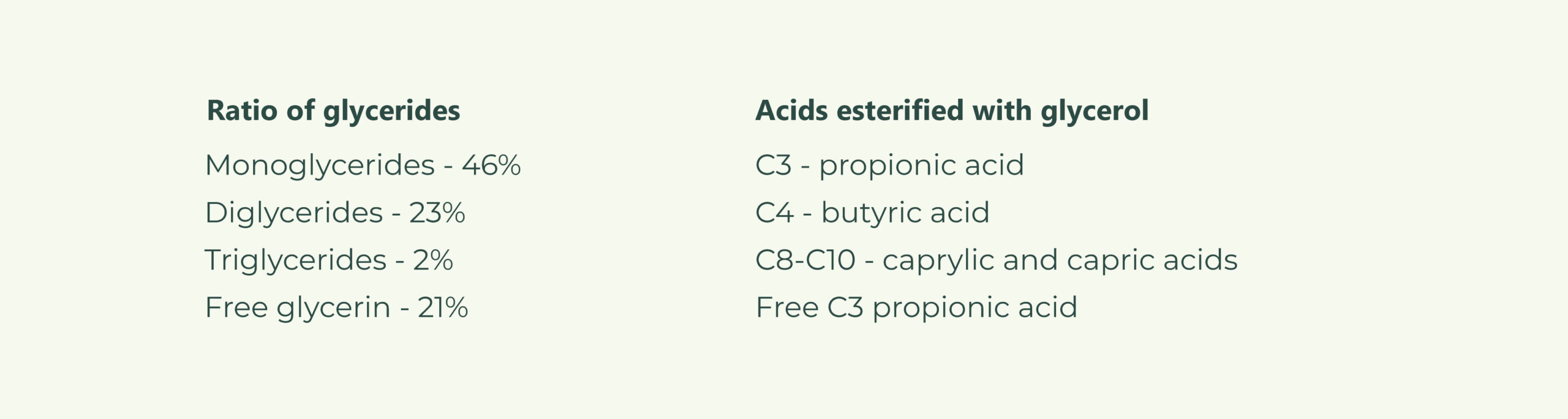
Glycerol is attractive to pathogenic bacteria as a nutrient. When alpha monoglyceride ‘meets’ pathogenic bacteria, the bacteria ‘sees’ the glycerol molecule and passes it into its interior through its feeding channel. Since the glycerol molecule is strongly bound to the organic acid molecules, it also penetrates the pores of the pathogenic bacterium.
The undissociated acid molecule passes through the bacterial cell wall.Inside the cell, the acid molecule dissociates and releases H+, thereby lowering the pH inside the cell. The change in pH disrupts the cell's vital functions, changes the osmotic balance, which ultimately leads to cell death.
PIGGERY
Weaned piglets:
- first 10-14 days after weaning at a dose of 250 - 800 ml/t of water (16 hours of treatment /
8 hours of fresh drinking water), if necessary, continue 50% of the dose (8 hours
treatment / 16 hours of fresh drinking water).
Starter:
- 7-10 days with a treatment dose of 250 - 800 ml/tonne of water (always 16 hours of treatment / 8 hours of fresh drinking water).
treatment / 8 hours of fresh drinking water).
Fattening:
- 5-7 days of treatment at a dose of 250 - 800 ml/tonne of water (always 16 hours of treatment / 8 hours of fresh drinking water).
8 hours of fresh drinking water).
POULTRY.
The drug is effective against Ecoli, Salmonella, Staphylococcus, Streptococcus ,
Clostridium.
Broiler:
From 1 to 21 days at a dose of 150 - 500 ml / t of water (always 16 hours of treatment / 8 hours of fresh drinking water)
The last 3-5 days of the fattening period (always 16 hours of treatment / 8 hours of fresh
drinking water)
Laying hens:
In the first 2 weeks 150 - 500 ml/t of water, then 1 time / two weeks 50% of the initial dose (always fresh untreated drinking water available for at least 8 hours per day).
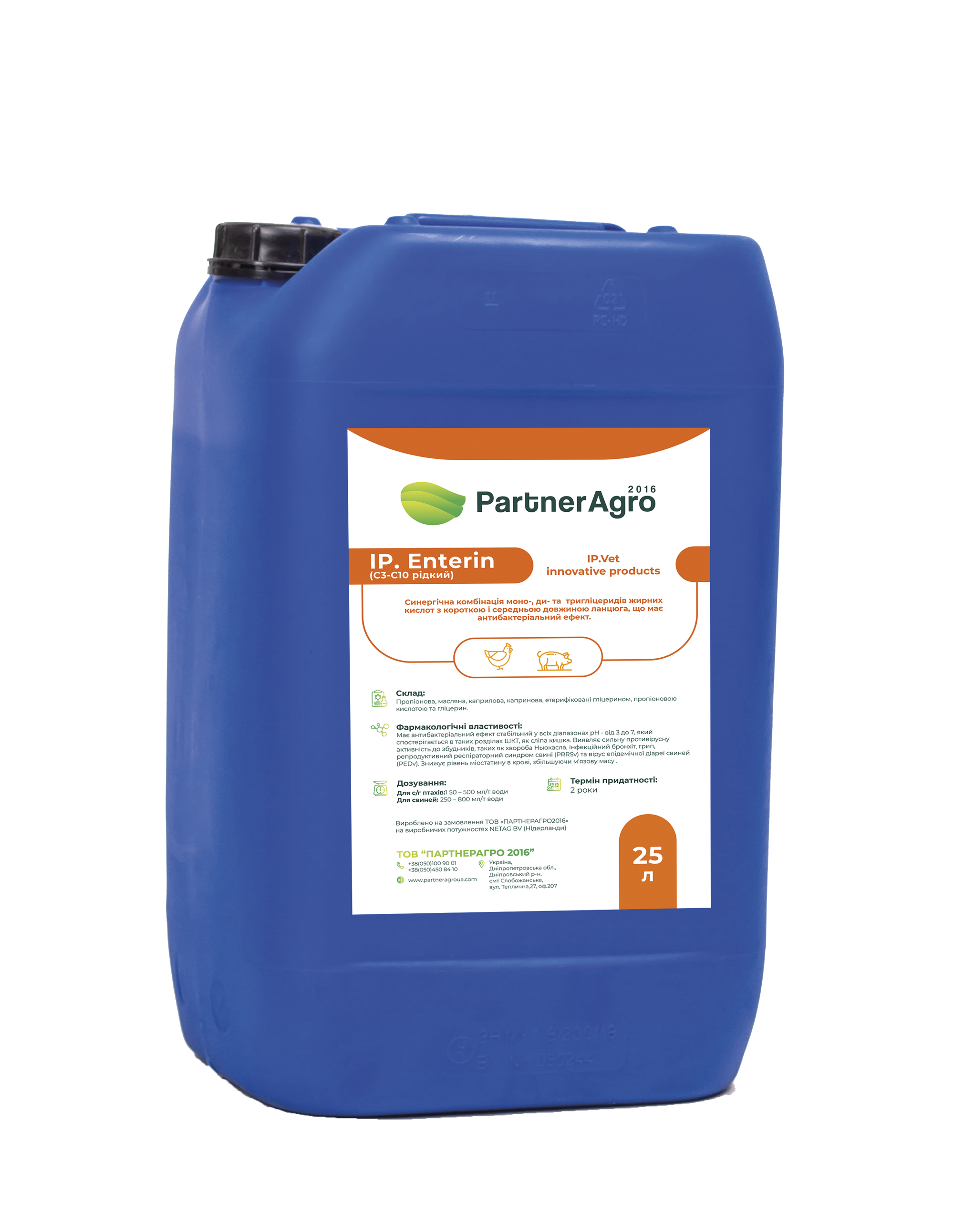
Poultry: 150 - 500 ml/t of water
Pigs: 250 - 800 ml/t of water
Store in the original packaging in a dry and cool place